ELP Project
My Experience
The story of my visit to the Etowah Indian Mounds.
What I saw and experienced
Arriving at Etowah
On a beautiful Saturday in September, it was sunny and 85 degrees. It was warm, but still great weather for my visit to the Etowah Indian Mounds. The drive toward Cartersville, Georgia, was short and scenic. I had the windows rolled down. My partner sat in the passenger seat and was just as curious as I was to learn what the mounds are and what they represent.
There were only two other cars in the parking lot. It was sad to see that the site was not receiving as many visitors as I believe it deserves. I think that is mostly because people do not know it is there. Before taking a Native American Studies class, I had no idea a place like this existed so close to home.
Climbing the largest mound
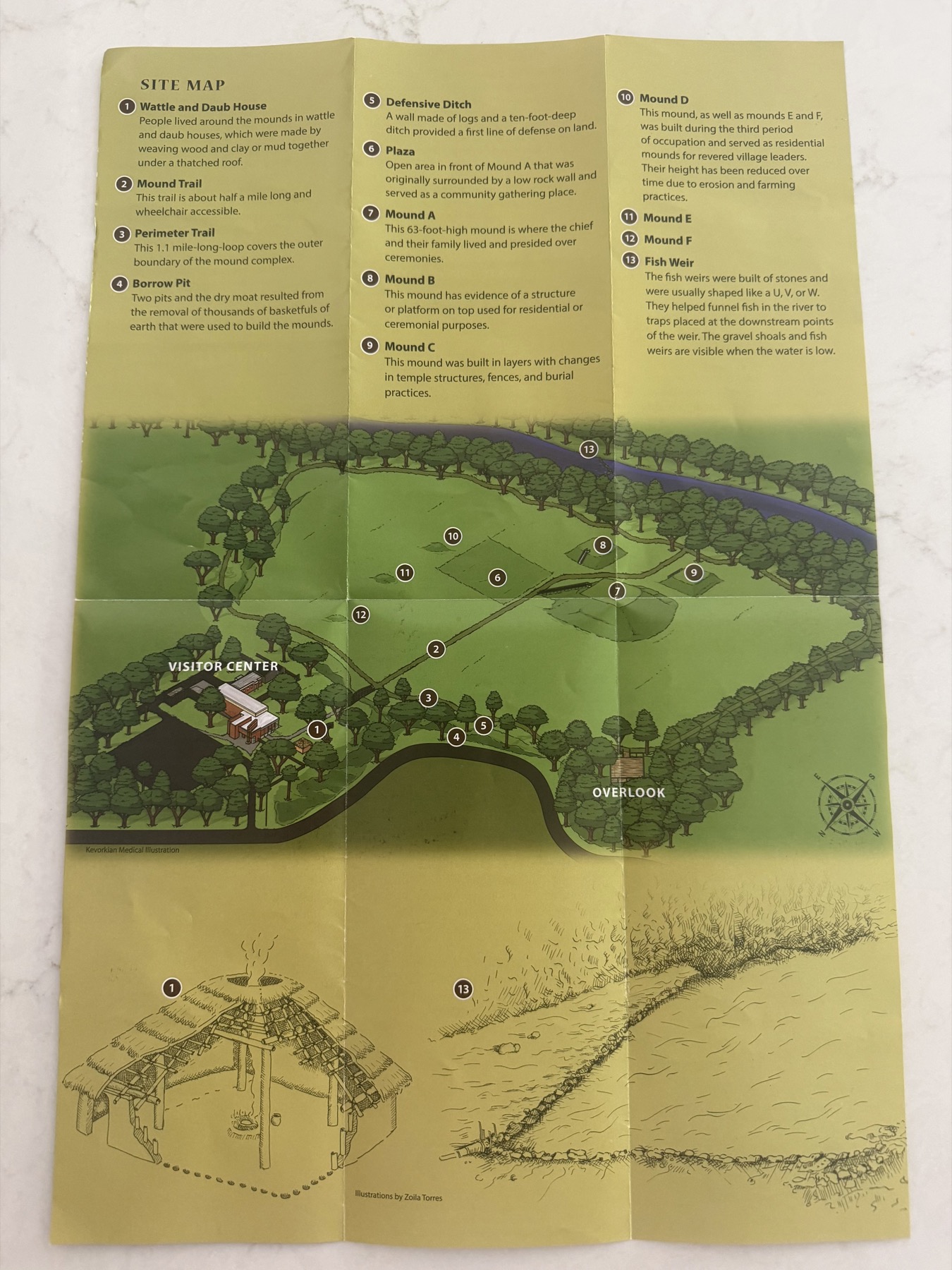
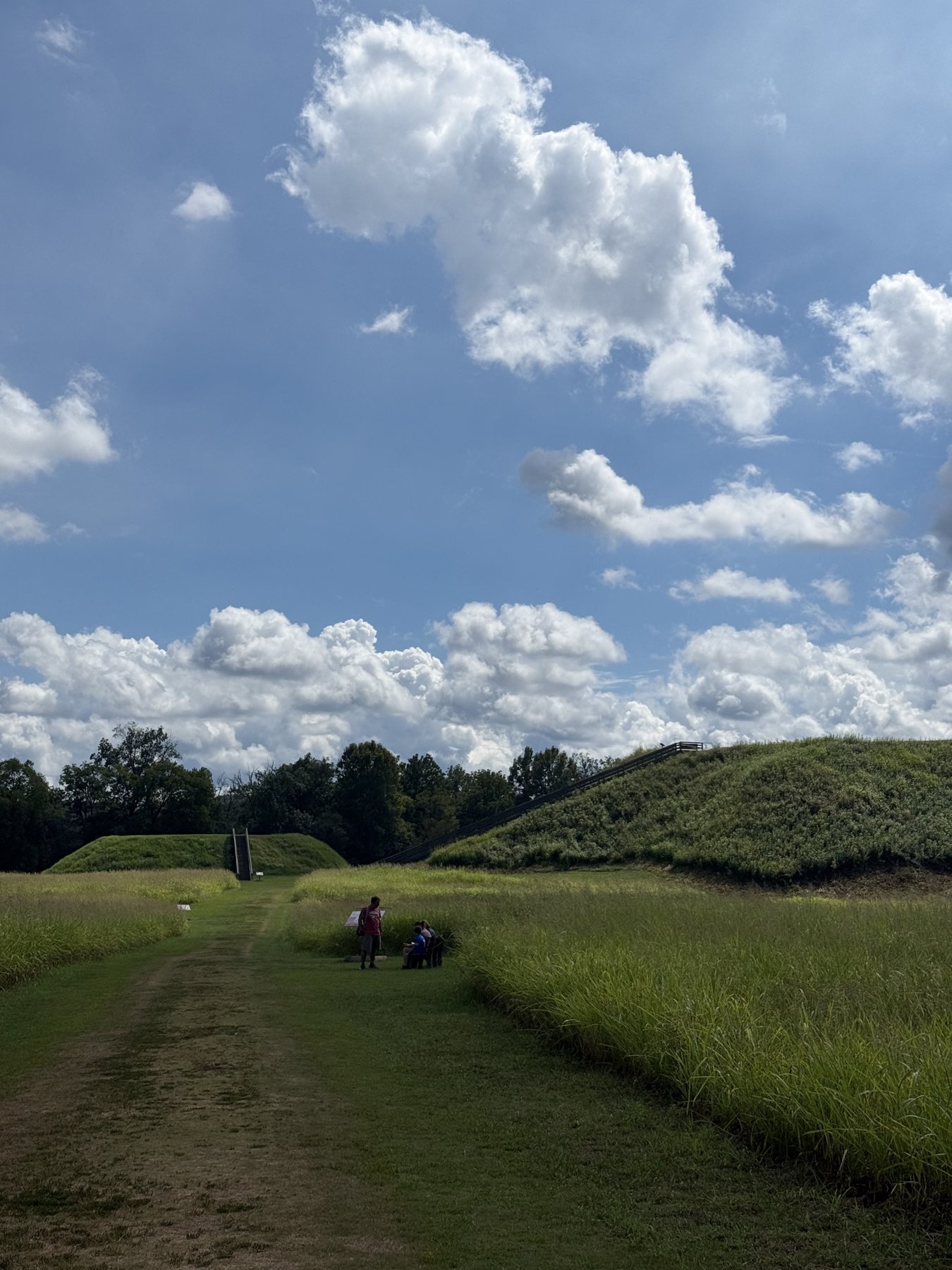
After paying for admission, we headed through the back of the visitor center and straight toward the mounds. Flowers covered parts of the preserved landscape. Bees buzzed nearby, and crickets chirped in the grass. As we approached the largest mound, we began climbing the steps built along its side.
The mounds look about three times bigger in person than they do in pictures. Maybe it was the heat, but words cannot describe how tall the largest one felt. It seemed like I was climbing forever. The effort was worth it because the view was magnificent. From the top, I could see Etowah's landscape and the smaller mounds spread across the property. After making my way back down, I decided that view was impressive enough that I did not need to climb every other mound.
Reaching the river
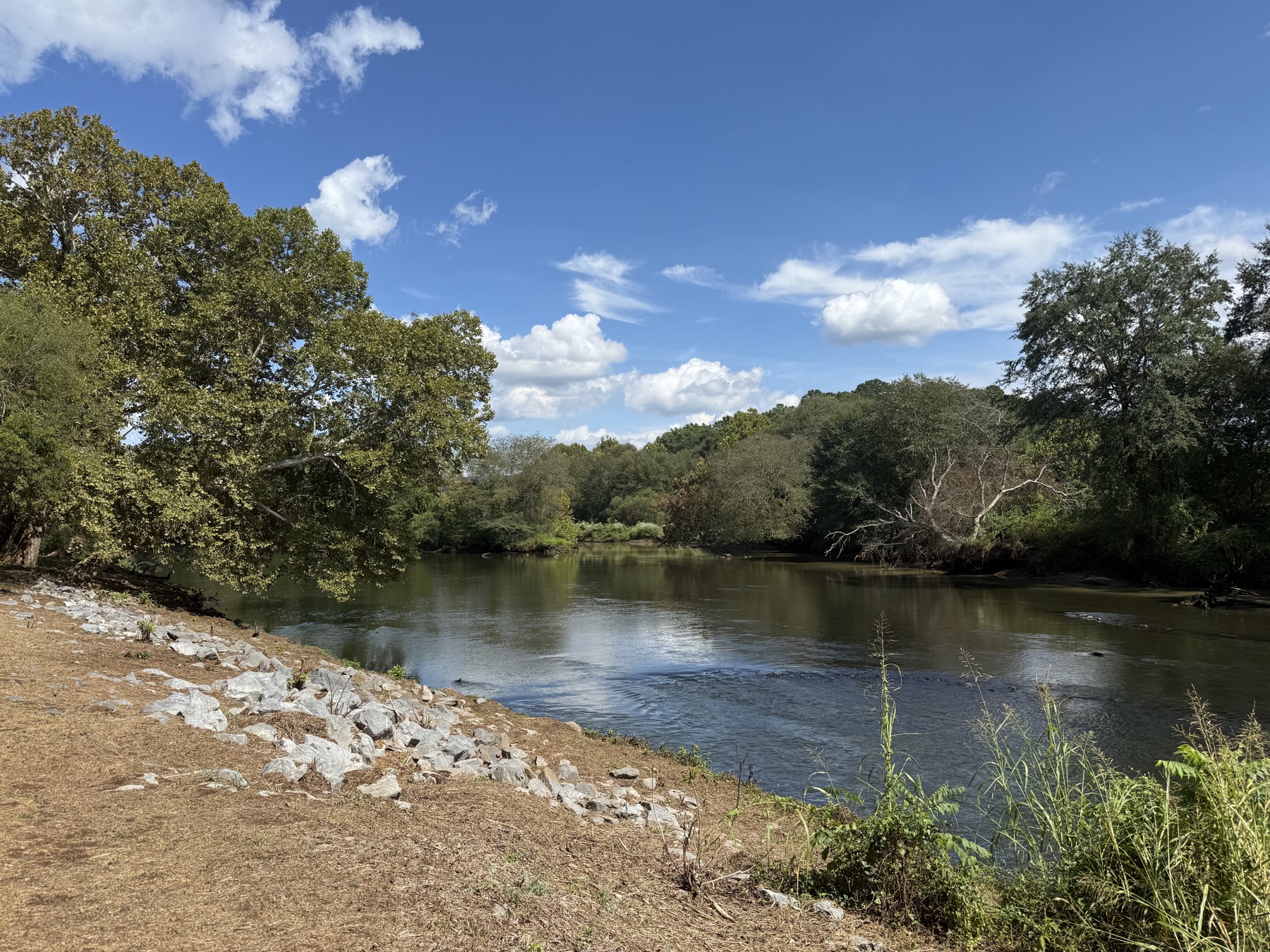
We continued across the grounds until we reached the Etowah River at the back of the preserve. The river may have been even more beautiful than the view from the mound. People at Etowah used the river for fishing. They built large V-shaped stone traps in the water that guided fish into places where they were easier to catch.
I decided it was the perfect place to sit down and take notes about what I had enjoyed so far. Being beside the same river that supported the town made the history feel real instead of distant.
Learning inside the museum
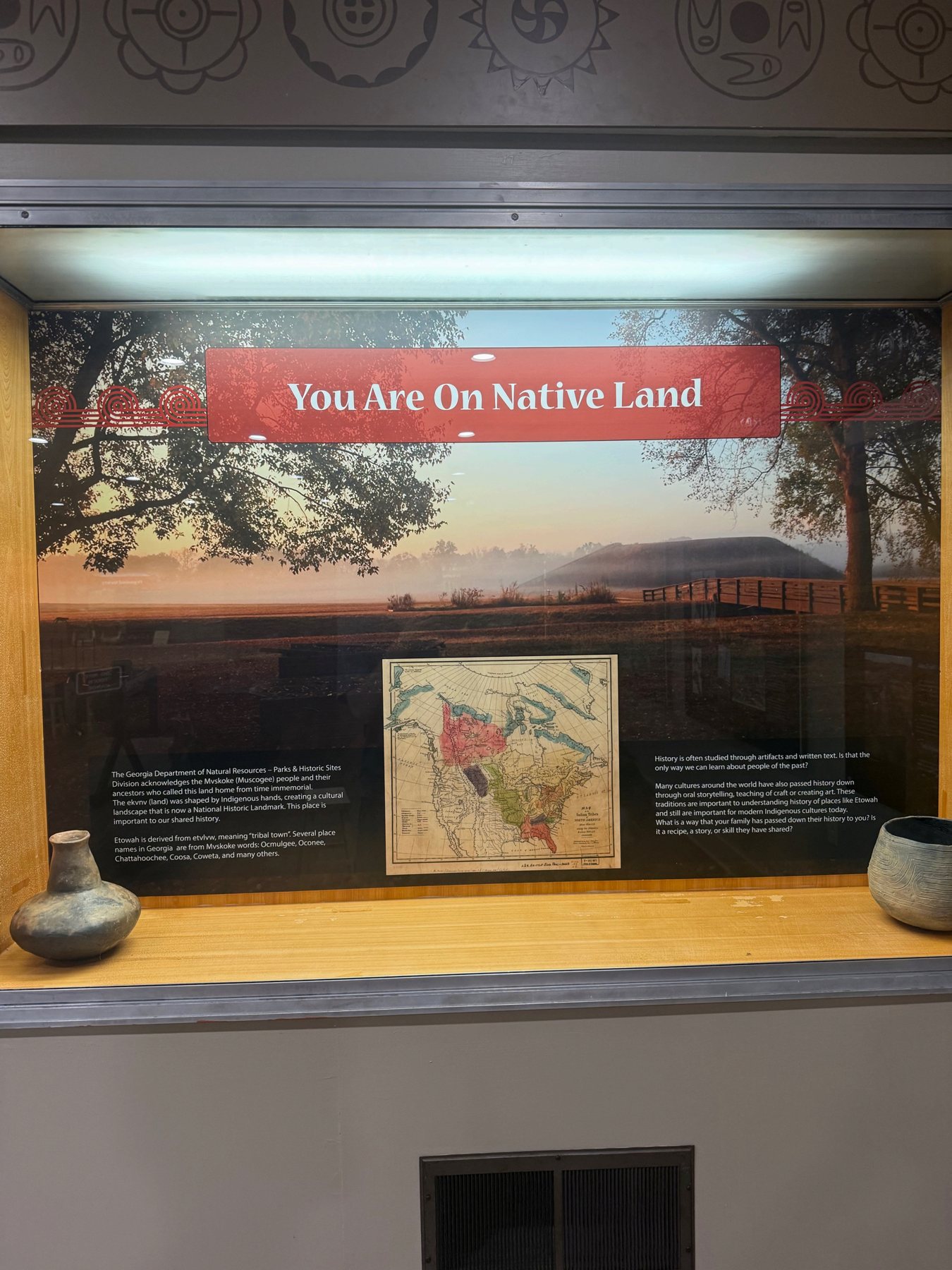
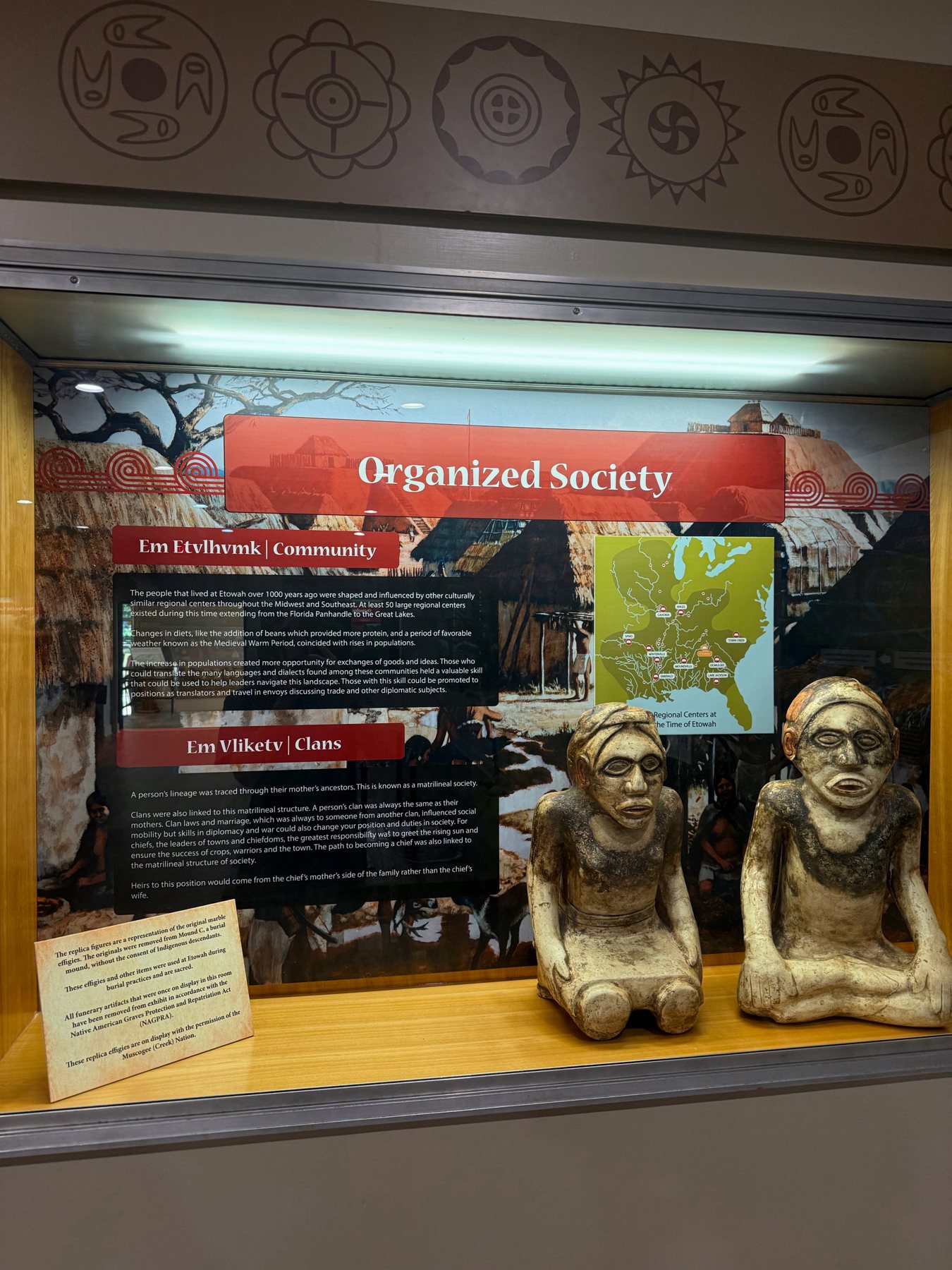
After some peaceful time beside the river, we returned to the visitor center. By then, I had also managed to sweat through my clothes. The museum is where I gathered most of the information for my Experiential Learning Project. Reading about the site's history felt more meaningful because I had just walked across the land and stood on the mounds.
The exhibits included animal pelts and skeletal displays. Other displays focused on tools, art, and daily life. They helped me understand how people found food and organized their town. I also learned how animal materials could become clothing, decoration, or useful objects.