ELP Project
Reflection
What I thought, wondered, and connected to class.
Learning on the land
Seeing a full community
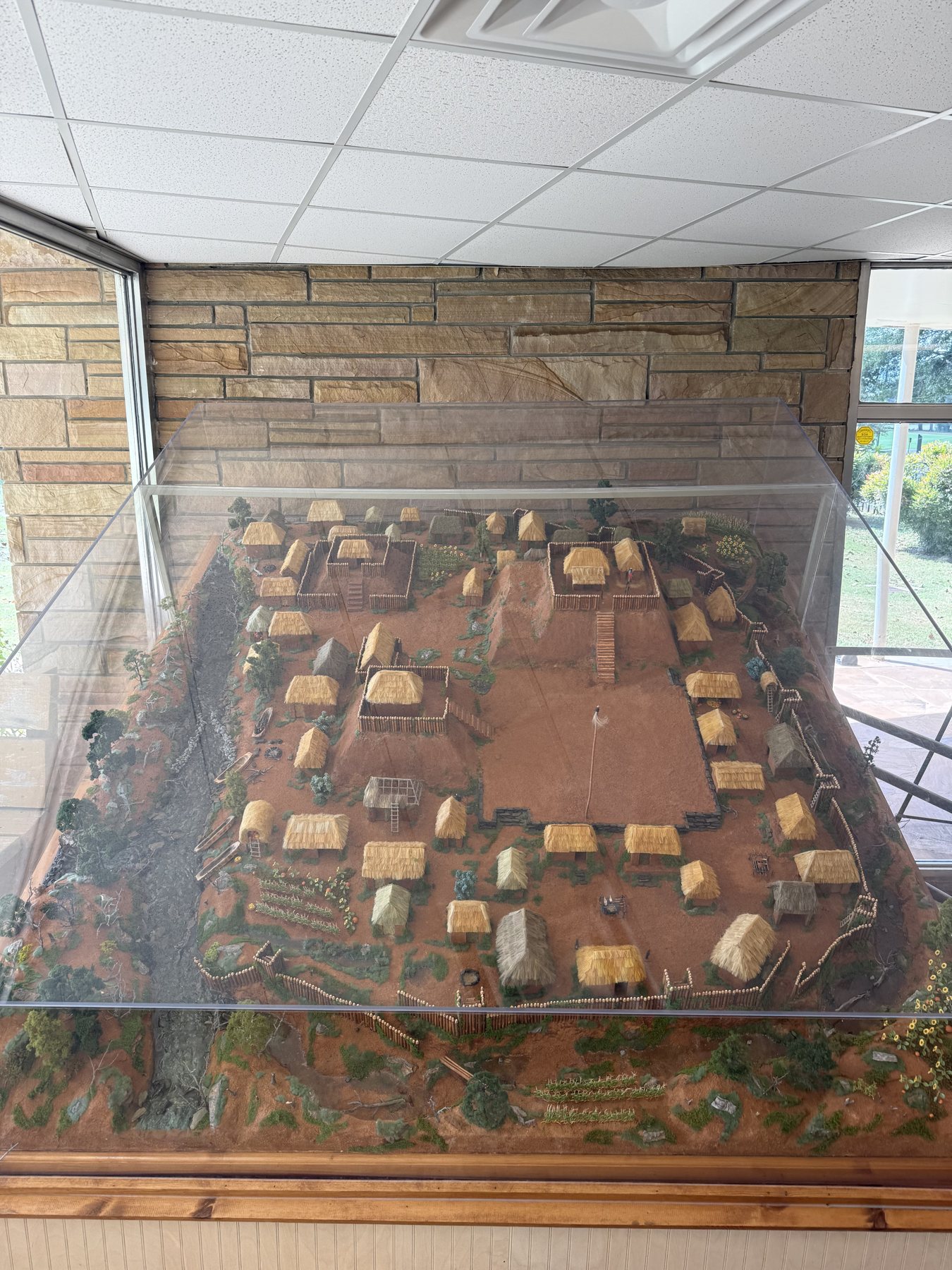
Before this project, I thought of the mounds mostly as unusual landforms built a long time ago. The museum model helped me picture a complete town instead. It showed the size of the houses and other buildings. It also showed where they stood around the central plaza.
I could follow the paths people would have walked between their homes and the mounds. The model showed how much open land was part of the community. It also made the distance to the river easier to understand. Looking at those details helped me imagine daily life at Etowah. People moved through this landscape to visit one another, gather food, attend ceremonies, and reach the water.
Connecting the visit to class
Roxanne Dunbar-Ortiz’s An Indigenous Peoples’ History of the United States made me rethink the idea that American history started when Europeans showed up. She explains that when settlers arrived, the land already had governments and trade systems, and Native communities already had their own ways of using and taking care of it. Visiting Etowah made that real for me because it was right here in Georgia. It wasn’t empty land just sitting there waiting to become a state. A big community had already built a life there.
The trip also reminded me of the After the Mayflower part of We Shall Remain. At first, the Wampanoag allied with the English to protect their people. But as the English settlements grew, they wanted more and more land, and the relationship changed. What stuck with me is that an agreement doesn’t protect a Native nation if the other side stops honoring it. That’s pretty much what happened later in Georgia, when Native people were removed because settlers wanted their land and their rights got ignored.
What stayed with me
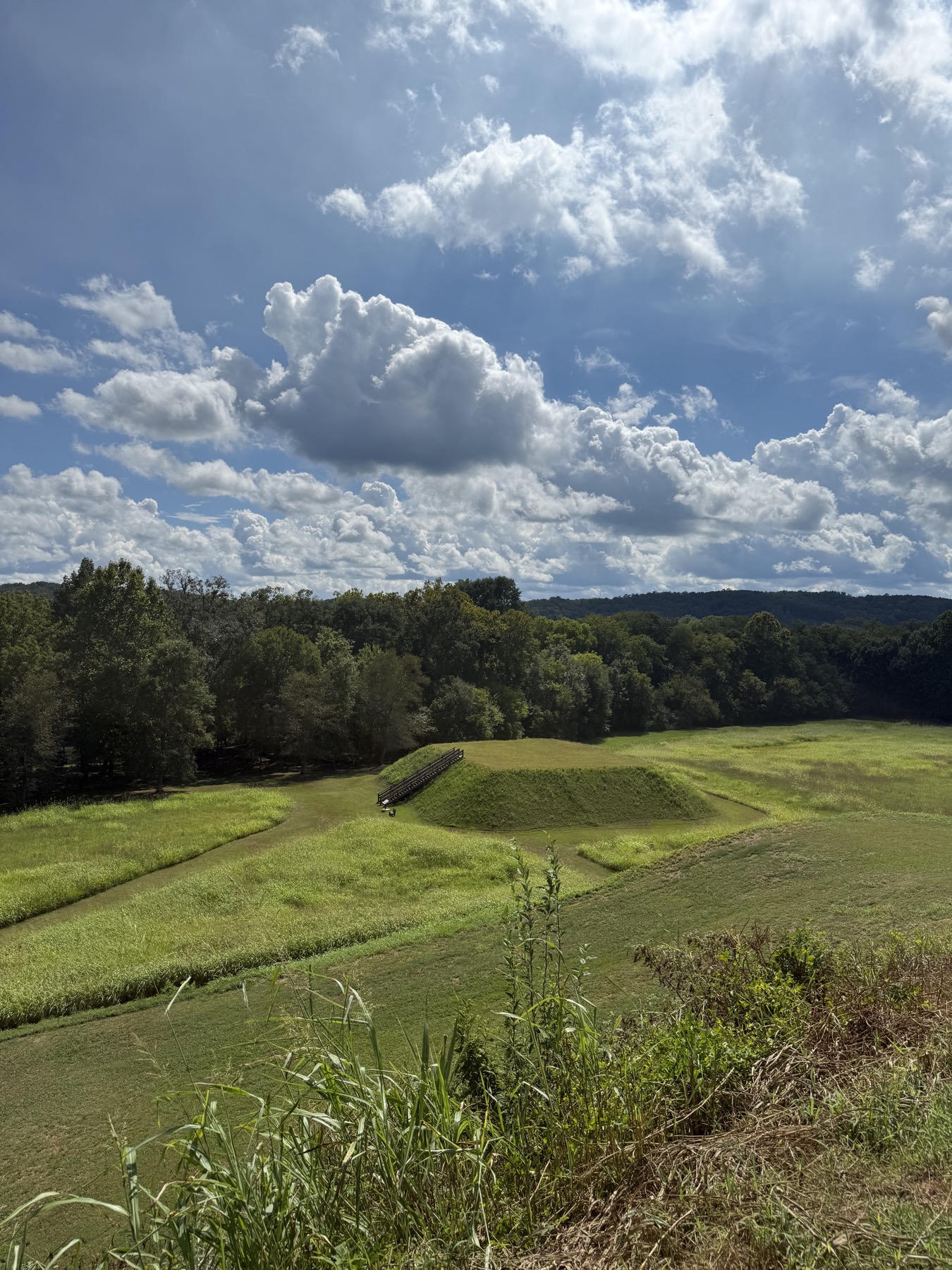
I knew Native nations had lived all over Georgia, but I never realized how big Etowah was or how far its trade reached. Standing on the mound and sitting by the river made it feel real instead of just something I read about. What bothered me most was finding out that burial items were taken without asking the tribes connected to them. It made me wonder why other people got to decide what happened to Native history. After this trip, I understand Etowah a lot better, and I think tribal nations and their descendants should be the ones making decisions about their ancestors and sacred belongings.
Taking a memory home
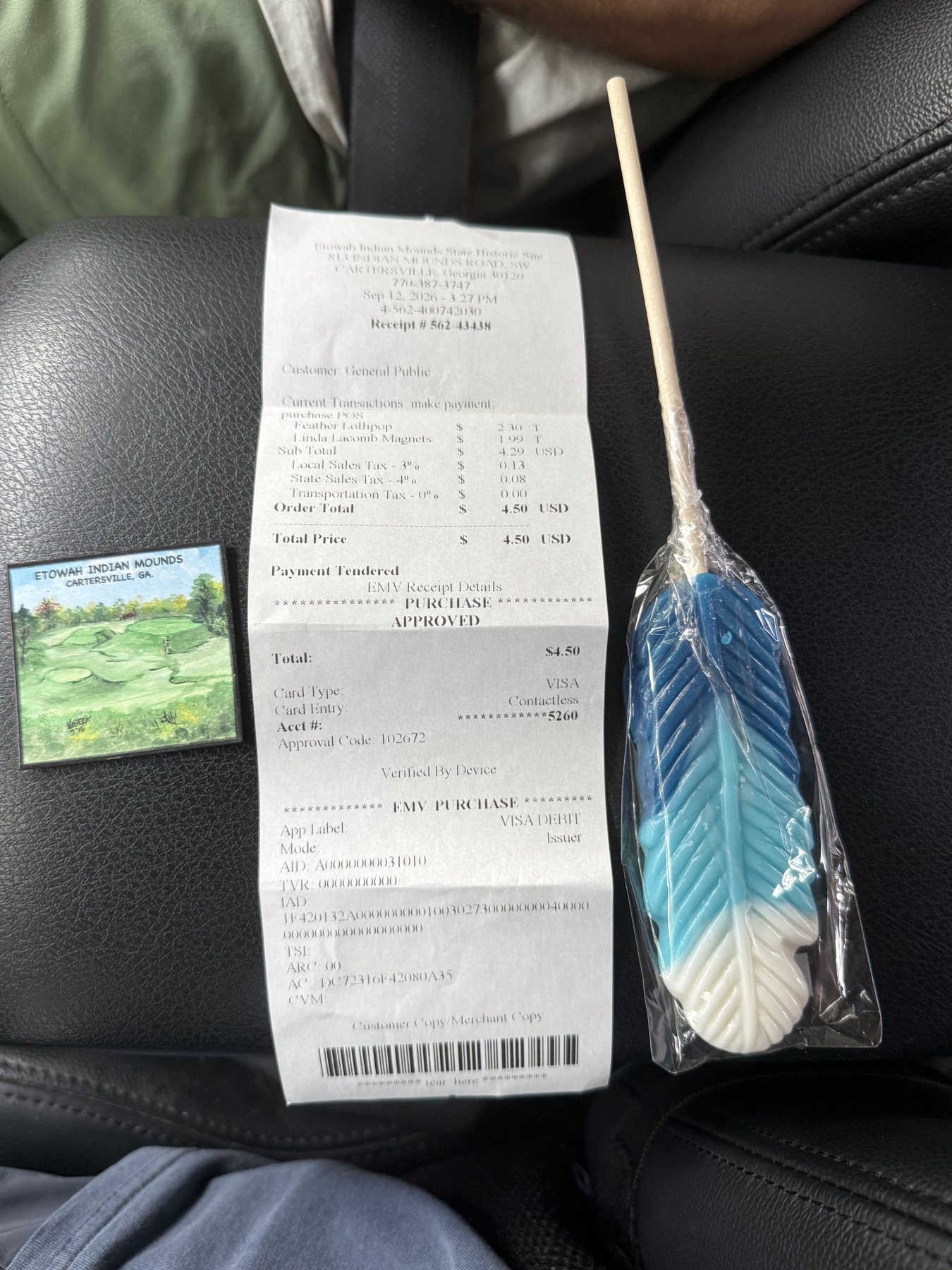
After gathering all that knowledge, I decided I needed a souvenir to remember the trip. I collect magnets, so I chose one with a landscape view of Etowah. My partner picked out a blue feather lollipop. The souvenir gives me a small reminder of a trip that changed how I see the history around my home.
Visitor information
Planning a visit
I had a great time at Etowah and would recommend the trip to anyone who lives nearby. I would also visit again because there is more to notice than I could take in during one afternoon. The site is generally open daily from 9 a.m. to 5 p.m., and current listings show admission ranging from $2 to $6. Information about accessibility, disabled access, pets, food and drinks, activities, and any changes to the hours or prices can be found on the official Georgia State Parks website.