ELP Project
What I Learned
Etowah's history, community, and continuing importance.
Understanding Etowah
How the mounds and town were used
Etowah was a large town with six mounds, open plazas, homes, pits where soil was gathered, and a deep defensive ditch. A wooden wall also surrounded the town. Seeing how all of these parts fit together helped me understand that the site was planned around daily life, leadership, safety, and ceremony.
Each major mound had its own purpose. Mound A is the largest at 63 feet tall, about the height of a six-story building. A building on top was likely used by the priest-chief as a home and temple. Mound B was a lower platform with a building that may have been used as a residence or ceremonial space. Mound C was used for burials. Some leaders and members of the nobility were buried there with detailed clothing and belongings.
The river provided food and worked like a route between communities. The official Etowah site explains that residents controlled trade along the Etowah River. Archaeologists found marine shells from Florida, pottery from the Mississippi Valley, copper, and stone from outside the area. Trading these materials also spread artistic styles, knowledge, and religious ideas between Native communities.
The New Georgia Encyclopedia describes the mounds and plazas at the center of town with homes built around them. That layout helped me picture thousands of people working, gathering, practicing traditions, and raising families at Etowah. It gave each part of the landscape a purpose and made the site feel like a real community.
People and place
The name Etowah comes from the Mvskoke word etvlwv, meaning “tribal town.” Groups began staying in this region during different seasons about 5,000 years ago. Communities in the Etowah River Valley became more permanent around 2,500 to 2,000 years ago. About 1,000 years ago, residents built platform mounds. They also built homes from wood and clay. Gardens provided crops, and stone traps in the river helped people catch fish.
A connected community
Etowah's influence was strongest about 700 to 800 years ago. Trade reached the Gulf Coast and the Ohio River Valley. People exchanged goods, but they also shared ideas. Translators traveled with leaders to help with trade and diplomacy. Etowah was a matrilineal society. Ancestry and clan membership followed the mother's family.
Removal and responsibility
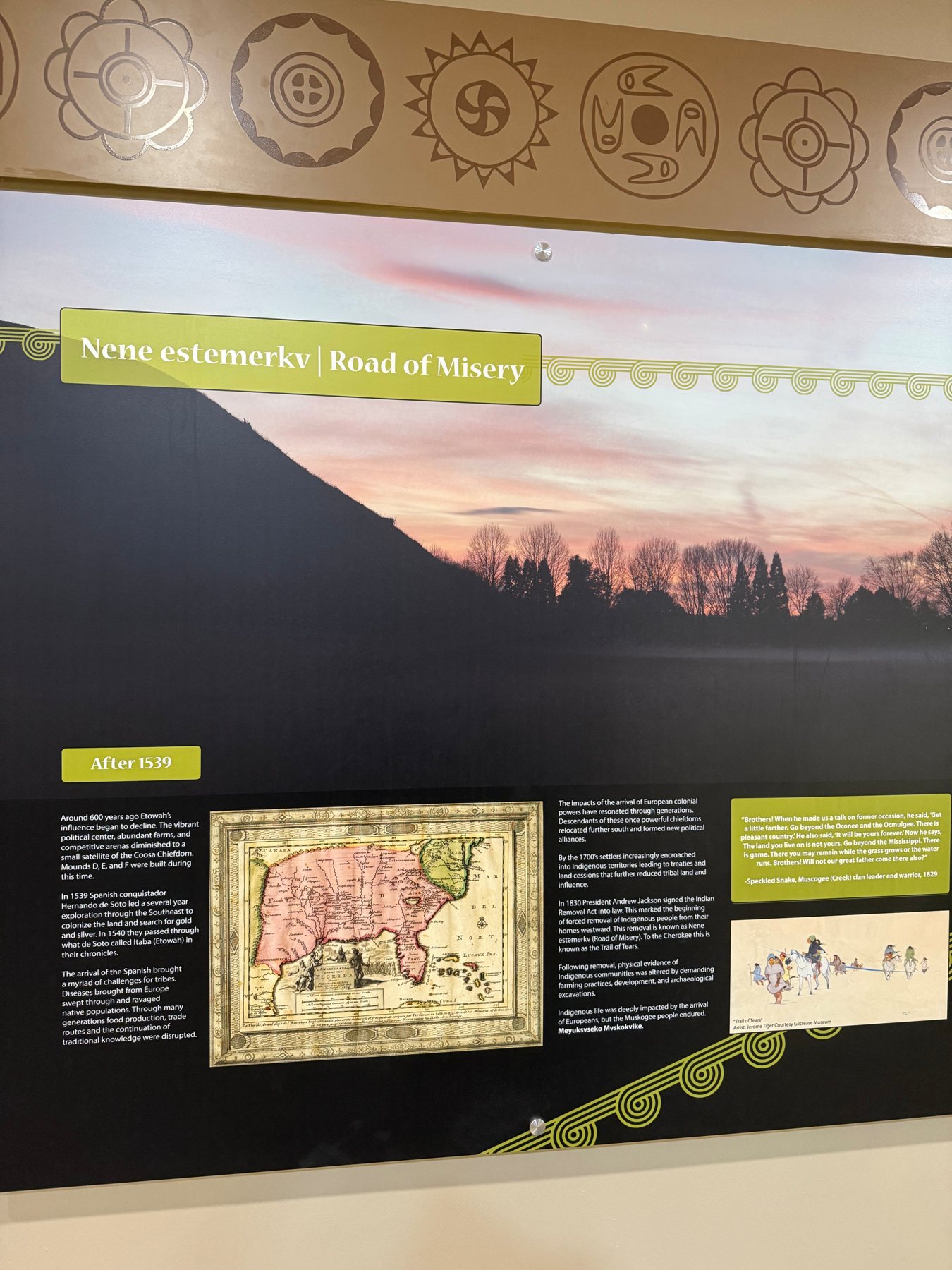
European diseases caused many Native people to die. Later government policies forced Native communities westward. During the twentieth century, objects from Etowah burials were taken without asking the tribes connected to the site. NAGPRA created a legal process for museums to return ancestors and burial belongings to Native nations. Tribal nations and descendants should have the strongest voice in decisions about their ancestors, sacred belongings, and history.